
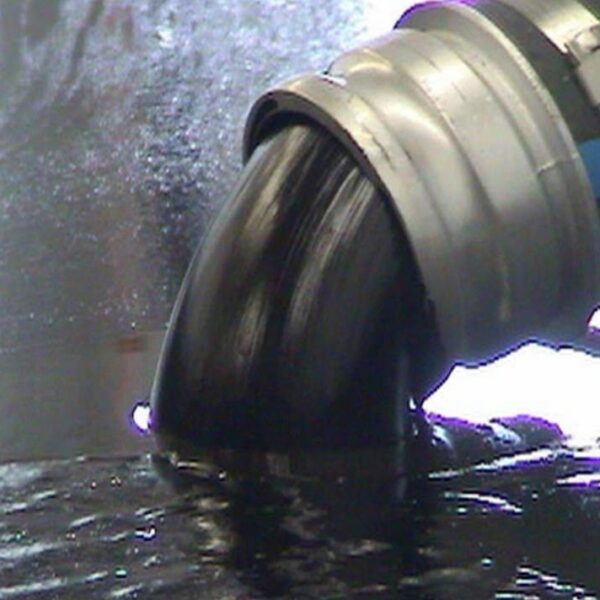









Penetration bitumen is classified based on the degree of penetration, and the basis of the degree of penetration is the degree of adhesion and hardness of the asphalt. The use of Penetration bitumen is mainly in road construction. For areas with warmer climates, stiffer bitumen (lower penetration degree) is used, and for areas with colder climates, looser bitumen (higher penetration degree) is used.
| Specification | Test Method ASTM | 30-40 | 40-50 | 60-70 | 85-100 | 100-120 |
| Density(g/cm3) | D-70 | 1.01-1.06 | 1.01-1.06 | 1.01-1.06 | 1-1.05 | 1.01-1.04 |
| Penetration at 25 ºC
(0.1mm) |
D-5 | 30-40 | 40-50 | 60-70 | 85-100 | 100-120 |
| Soft Point(ºC) | D-36 | 55-63 | 52-60 | 49-56 | 45-52 | 42-49 |
| Ductility at 25 ºC
(cm) |
D-113 | Min 100 | Min 100 | Min 100 | Min 100 | Min 100 |
| Flash point (ºC) | D-92 | Min250 | Min250 | Min250 | Min250 | Min250 |
| Solubility in Disulfide (Wt.%) | D-4 | 99.5 | 99.5 | 99.5 | 99.5 | 99.5 |
| Spot Test | AASHTO T 102 | Negative | Negative | Negative | Negative | Negative |
| Weight Loss Due to Heat (Wt.%) | D-6 | Max 2 | Max 2 | Max 2 | Max 2 | Max 2 |
| Effect of Penetration Loss on Heat (%) | D-6-D-5 | 20 Max | Max20 | Max20 | Max20 | Max20 |